February 2, 2026 – Raleigh, NC – Invicta Environmental Pest Defense
When you spot a fast-moving spider skittering across your floor, it’s easy to panic — especially if it looks like one of the venomous species you’ve heard about. Whether you are searching for pest control in Raleigh, NC or pest control in Wake Forest, NC, homeowners often report seeing “violin spiders” or “brown recluse spiders” that turn out to be wolf spiders instead. Both spider types can look similar at a glance, but knowing how to identify them — and what to do if you find them — can make all the difference in keeping your family safe and your home pest-free.
At Invicta Environmental Pest Defense, we specialize in spider pest control for Raleigh, NC and pest control for Wake Forest, NC, helping residents identify and safely remove unwanted pests from their homes and yards through our Little League Pest Defense Service package.
🕵️ How to Tell Wolf Spiders and Violin Spiders (Brown Recluse Spiders) Apart
Even seasoned homeowners confuse these two species — but they’re quite different once you know what to look for.
1. The Violin Spider (Brown Recluse Spider)
- Scientific name: Loxosceles reclusa
- Commonly called the violin spider because of the dark violin-shaped marking on its back (cephalothorax).
- Usually light brown to tan in color.
- Has six eyes, arranged in pairs — this is a key identifier since most spiders have eight eyes.
- Prefers dark, undisturbed areas like garages, closets, attics, and basements.
- Native to the south-central U.S. — while rare in North Carolina, isolated pockets have been found indoors where it’s warm and sheltered.
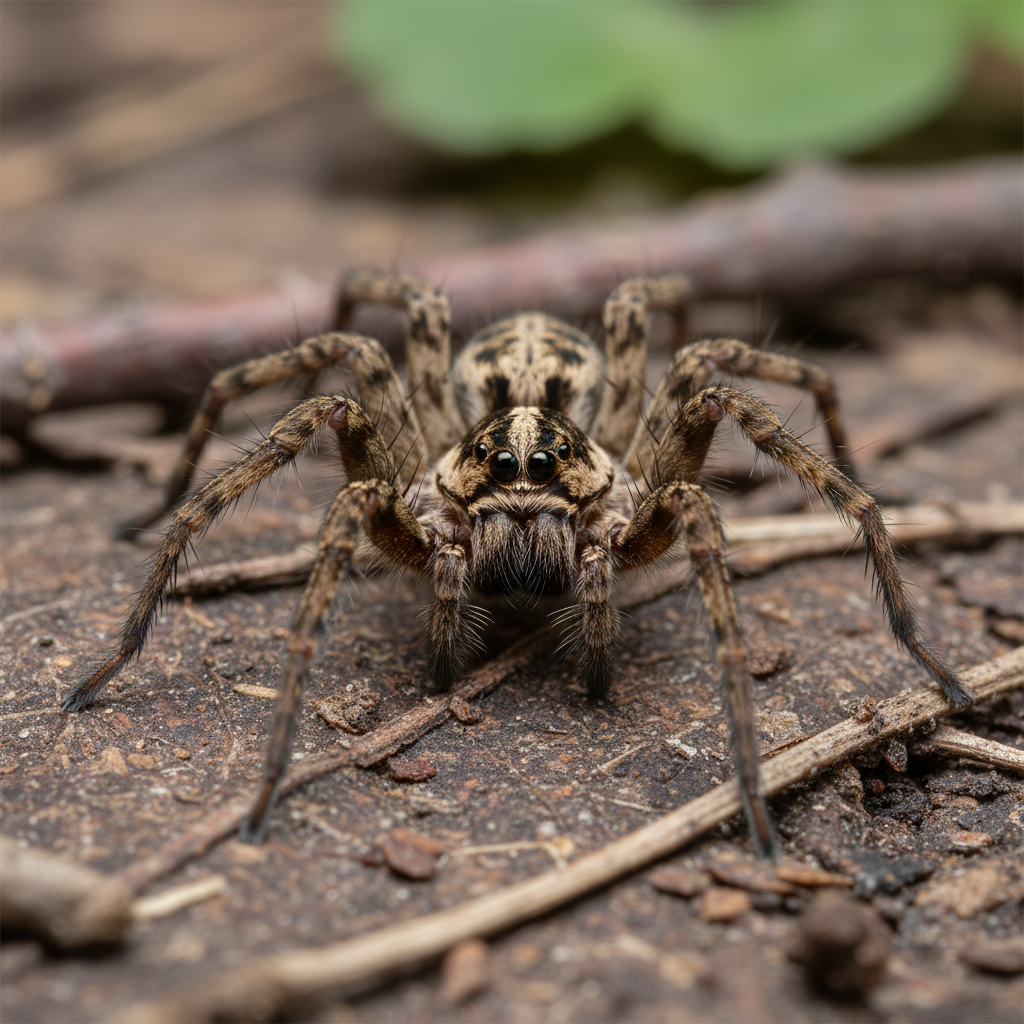
2. The Wolf Spider
- Scientific family: Lycosidae
- Larger and hairier than the brown recluse.
- No violin-shaped marking. Instead, wolf spiders have bold dark and light stripes and a robust, athletic body built for running.
- They have eight eyes arranged in three distinct rows, which give off a noticeable shine in flashlight beams at night.
- Active hunters that live outdoors, often found around gardens, patios, and inside garages or basements.
⚠️ Are Wolf Spiders Poisonous or Dangerous?
This is one of the most common questions we get: “Are wolf spiders poisonous?”
✅ Technically, yes — wolf spiders possess venom, but it’s not considered medically dangerous to humans. Their venom helps them subdue insects and other small prey, but most wolf spider bites only cause mild irritation, itching, or swelling similar to a bee sting.
Unless you have an allergic reaction, wolf spiders aren’t dangerous — they’re more bark than bite.
That said, wolf spiders look intimidating and can deliver a painful bite if threatened. It’s best to carefully remove them rather than squash or provoke them.
🩹 Wolf Spider Bite vs. Brown Recluse Bite
Wolf Spider Bite:
- Immediate, mild pain at the site.
- Swelling, redness, and tenderness for 1–2 days.
- Symptoms typically fade quickly with cleaning, ice, and over‑the‑counter ointment.
Brown Recluse (Violin Spider) Bite:
- Bite is often painless at first but may worsen hours later.
- May develop a necrotic lesion (tissue damage) in severe cases.
- Symptoms can include fever, chills, nausea, or fatigue.
- Medical evaluation is strongly recommended if you suspect a recluse bite.
If you’re ever unsure which spider bit you, save the specimen (carefully) and contact a pest control or medical professional.
🧠 3 Interesting Facts About Brown Recluse Spiders
- They Can Survive Long Periods Without Food or Water. Brown recluses can live up to 6 months without eating, often hiding quietly behind baseboards or inside furniture.
- They’re Shy and Non‑Aggressive. They rarely bite unless trapped against skin or disturbed.
- Not All “Recluses” Are Recluse Spiders. Many harmless spiders with brown markings are misidentified as recluses — proper ID is key before assuming danger.
🧠 3 Interesting Facts About Wolf Spiders
- They Carry Their Babies. Female wolf spiders carry their egg sac attached to their abdomen — and even more impressively, carry their spiderlings on their back after hatching.
- Excellent Night Vision. Their large, reflective eyes make them shine in flashlight beams.
- Beneficial Hunters. Wolf spiders eat insects like cockroaches, flies, and crickets, helping control pests naturally — though most homeowners still prefer them outside.
🧰 Spider Control Methods for Raleigh and Wake Forest Homes
Whether you’re dealing with wolf spiders, violin (brown recluse) spiders, or other unwanted arachnids, the best defense is a clean and sealed home combined with professional pest management.
1. Eliminate Food Sources
Spiders follow their prey. Reducing insect populations inside your home (ants, roaches, silverfish) helps keep spiders away.
2. Seal Entry Points
Check window seals, door frames, vents, and foundation gaps. Even small cracks let spiders sneak in during temperature changes.
3. Reduce Clutter
Both brown recluse and wolf spiders love hiding in piles of boxes, laundry, wood, or debris. Keep storage areas tidy.
4. Keep Outdoor Lighting Minimal
Lights attract insects. Fewer insects mean fewer spiders drawn toward your home.
5. Schedule Professional Pest Control
At Invicta Environmental Pest Defense, we use safe, eco‑friendly pest‑control treatments in Raleigh, NC and Wake Forest, NC that target both insects and spiders.
Our spider control strategy includes:
- Exterior barrier treatments
- Web and egg‑sac removal
- Crawl‑space inspection
- Entry‑point sealing
- Ongoing monitoring and seasonal maintenance
Regular service protects your home year‑round — especially in the humid North Carolina climate, where pest activity peaks in spring and summer.
🏠 Protect Your Home with Invicta Environmental Pest Defense
Spiders play a helpful role outdoors, but inside your living space, they’re an unwelcome surprise. Don’t rely on guesswork — rely on local experts who know Raleigh and Wake Forest pests inside and out.
At Invicta Environmental Pest Defense, we:
- Identify harmful vs. harmless spiders with precision
- Remove infestations safely and efficiently
- Provide education and prevention strategies
- Offer pet‑ and family‑safe treatments
Whether you’ve spotted a violin spider (brown recluse), a large wolf spider, or aren’t sure which one you’re seeing, our trained technicians can help you figure it out — and stop spiders from coming back.
🕸️ Contact Invicta Environmental Pest Defense Today
Serving Raleigh, NC, Wake Forest, NC, and surrounding Wake County communities.
☎️ Call us today for a spider inspection or to schedule comprehensive pest control that keeps your home safe, clean, and spider‑free.
Because peace of mind starts with a pest‑free home — and Invicta Environmental Pest Defense helps make it happen.
Learn how Invicta Environmental Pest Defense got started as a Raleigh exterminator in 2021.