If you hear scratching, scampering or something rolling across the ceiling early in the morning or late in the afternoon, you most likely have gray squirrels in the attic. If the noise comes at night, think flying squirrels. Either way, the fix is the same. Find every way in, get the squirrels out humanely, then seal those openings so they can’t chew their way back in.
Squirrels in the attic are one of the most common calls we get in Raleigh. Here’s how to tell what you have and what actually works.
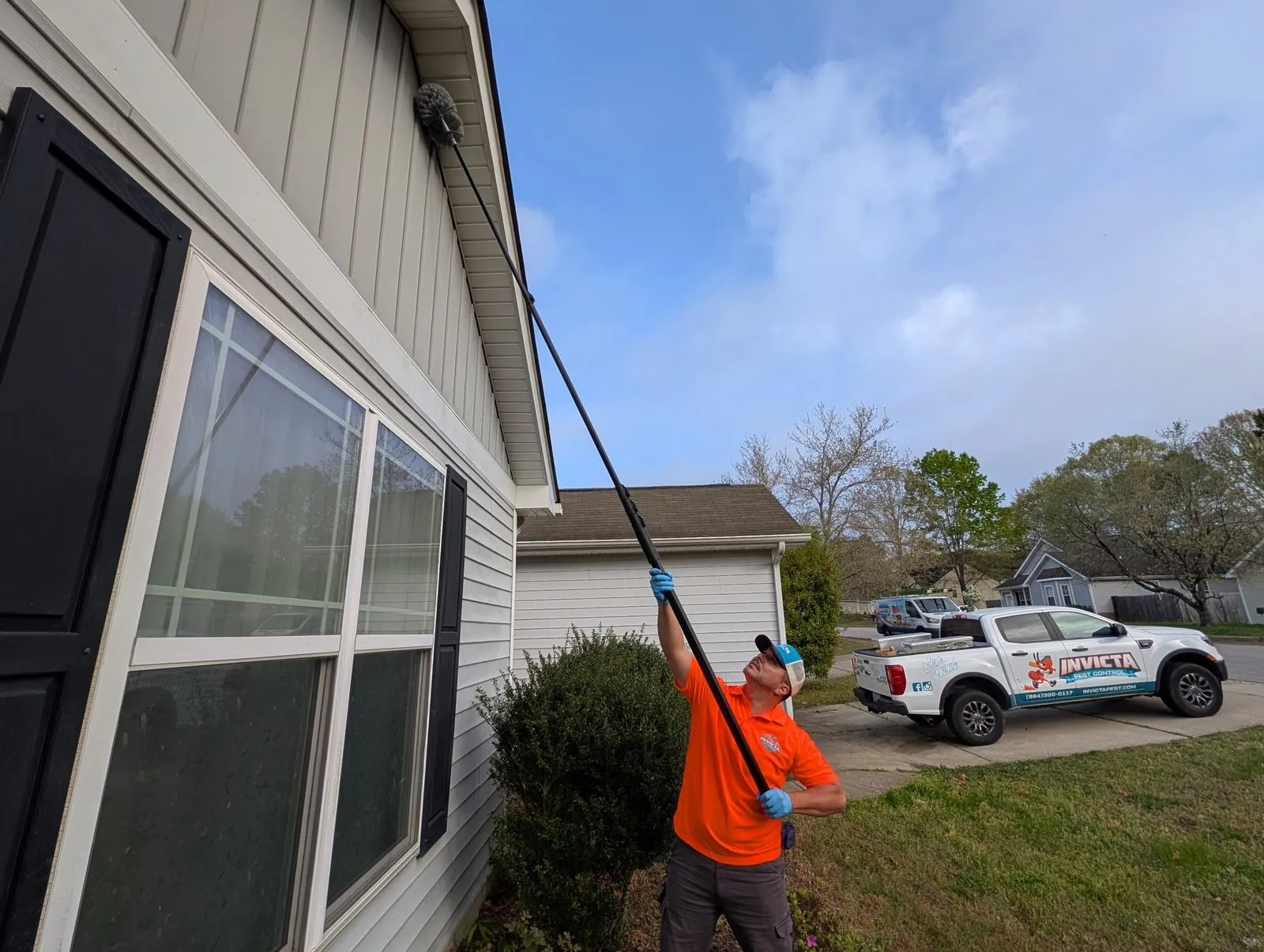
Signs of squirrels in the attic
- Noise at the same times every day. Gray squirrels are active during the day, so they’re loudest at sunrise and again in the late afternoon, right when you’re home to hear them.
- A chewed hole at the roofline. Look at the corners where roof sections meet, soffits, fascia boards, gable vents and roof vents. Fresh chew marks look light colored against the old wood.
- Squirrels on the roof. Watch for squirrels running along the gutters or jumping onto the roof from a nearby tree.
- Droppings and urine stains in the attic, especially near the insulation and along the eaves.
- Torn-up insulation that’s been pulled into a nest.
- Chewed wiring. If you can see it, take it seriously.
Why squirrels end up in your attic
An attic is warm, dry and safe from predators, which makes it a perfect place for a nest. North Carolina’s Wildlife Resources Commission notes that gray squirrels have two peaks in their breeding season, from February to April and again in July and August. Those are the times a mother is most likely to be raising young in an attic.
Trees make it easy. A branch hanging over the roof gives a squirrel a bridge right to your shingles.
Why it’s more than a noise problem
- Wiring. Squirrels chew constantly, and attic wiring is an easy target. Chewed wires can create a fire hazard.
- Insulation. They tear it up for nests and soil it with droppings and urine, which hurts your energy bills.
- Water. The holes they chew let rain in, and that leads to wood damage around the roofline.
- Fleas and ticks. Squirrels often bring them in, and they can move into the living space.
How to get rid of squirrels in the attic
Don’t seal the hole yet
It’s tempting to nail a board over the opening and call it done. If squirrels are still inside, they’ll chew a new way out, often through a spot that costs more to fix. And if there are babies in the attic, sealing them in is the worst outcome for everybody.
Find every way in
Squirrels often use more than one opening, and they’ll test other weak spots once you close their favorite. A good inspection covers the whole roofline, soffits, fascia, gutters, gable vents and roof vents, plus nearby tree branches.
Get the squirrels out humanely
Removal should follow North Carolina’s wildlife rules. Trapping a squirrel that’s damaging your home generally takes a depredation permit, which licensed Wildlife Control Agents can issue. The Wildlife Resources Commission also points out that relocating wildlife isn’t considered humane or effective. Relocated animals have a low chance of survival, many try to make it back home, and moving one squirrel doesn’t fix the hole that let it in.
Seal every opening for good
Once the squirrels are out, every entry point gets sealed with heavy-duty, chew-resistant materials, and weak spots along the roofline get reinforced. This is the step that actually ends the problem.
Trim the trees
The Wildlife Resources Commission recommends trimming tree limbs back at least 6 feet from the house so squirrels can’t jump onto the roof. It’s one of the best things you can do to keep them from coming back.
Clean up after them
Nesting material, droppings and soiled insulation should come out. It’s also worth checking for fleas and ticks the squirrels left behind and for insulation that needs to be replaced.
Gray squirrels vs flying squirrels
Gray squirrels, North Carolina’s state mammal, are the ones most people picture. Flying squirrels are a different job.
- They’re nocturnal, so you hear them at night.
- They’re small and can fit through a gap about the size of a quarter.
- They live in groups, so there are often several in one attic, and they can go months without being noticed.
Flying squirrels take special handling, which is why we have a separate flying squirrel control service.
How we handle squirrels at Invicta
Mike and Randolf both hold North Carolina Wildlife Control Agent licenses, and our Wildlife Biologist, Paul Hill, and Mike set the best practices we follow together. On a squirrel removal job, we:
- Inspect your attic, roofline, soffits, fascia, gutters and nearby trees to find every entry point and see how many squirrels you have.
- Remove the squirrels with humane, professional methods that follow state wildlife rules.
- Seal every access point with durable, chew-resistant materials and reinforce the weak spots.
- Clean up nesting material, check for fleas and ticks and look over the insulation.
We usually schedule squirrel calls the same day or the next day. You can also email a photo of the damage or droppings to info@invictapest.com, and our team can often tell you what you’re dealing with before we come out.