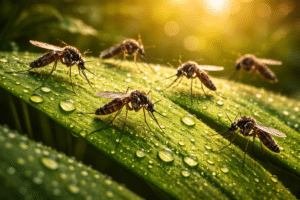
Waterfront living in Raleigh sells itself in May. By June, the mosquitoes are running the place.
I have spent the last 20+ years as an entomologist walking properties around the Triangle, and I can tell you with confidence: if you back up to Falls Lake, Lake Wheeler, the Neuse, Crabtree Creek, or one of the HOA retention ponds in any of the newer Raleigh subdivisions, your mosquito problem is in a completely different category than your inland neighbors’. The same water that gives you the view also hands mosquitoes everything they need to throw a summer-long block party in your yard.
Here is what most pest control companies will not tell you: treating a waterfront yard is a totally different game than treating a yard a quarter mile inland. And if your last mosquito guy gave you the same plan he gives every other house on the block, you have probably already noticed.
Let me walk you through how I actually think about these properties.
Why Living Near Water Makes Mosquitoes So Much Worse
Mosquitoes are simple creatures with three basic needs. Warm blood. Vegetation to hide in during the day. Standing water to breed in. Living near a lake, pond, or creek hands them two out of three before they even start.
An NC State study of 52 stormwater facilities found permanent-water mosquito species in roughly a third of them. The headliners:
- Culex erraticus (in 18% of facilities)
- Anopheles quadrimaculatus (9.4%)
- Anopheles punctipennis (5.6%)
Translation: if there is a retention pond, lake, or slow-moving creek within a few hundred feet of your back door, you have neighbors. Hungry ones.
A bonus fact that nobody loves: those “innovative” wet ponds with the planted vegetation zones, the kind every new Triangle subdivision puts in to look natural, actually support MORE mosquito species than basic open ponds. Beautiful design. Five-star mosquito real estate.
The Water Around Your House You Are Probably Not Thinking About
The lake or pond gets all the attention. But mosquitoes do not care about your view. They care about ANY standing water, and most waterfront yards have an embarrassing amount of it hiding in plain sight.
The usual suspects I find on Raleigh inspections:
- Drainage ditches that hold water for days after a storm
- Clogged gutters (the number one missed breeding site, every single year)
- Tree holes and rotted stumps that collect rainwater
- Tarps over woodpiles, grills, and boats
- Birdbaths and ornamental fountains
- French drains and sump pump discharge points
- Tire ruts left from any recent landscaping or construction
- Kid toys, wheelbarrows, even forgotten dog bowls
Then hurricane season rolls in. Broken branches. Blocked culverts. Waterlogged mulch beds. A yard with a creek behind it can produce a brand new generation of mosquitoes within 7 to 10 days of a serious rain. And Raleigh gets serious rain.
Why Your Last Mosquito Company Could Not Fix It
Here is the part that frustrates me, and the part where most waterfront homeowners realize they have been burned.
Most mosquito companies treat with pyrethroids, the synthetic cousins of compounds found in chrysanthemums. They work great on terrestrial insects. They are also, per the EPA, “extremely toxic to fish and aquatic invertebrates.”
That is not green-marketing fluff. That is the EPA’s mandatory label language.
Because of that toxicity, the EPA requires buffer zones around water bodies. Ground application: a minimum of 25 feet from lakes, rivers, permanent streams, marshes, natural ponds, and commercial fish ponds. Aerial application: 450 feet.
So if your property line touches the water, there is a 25-foot strip of your yard, conveniently the part where the mosquitoes are densest, that legally cannot be treated with most standard products. You are paying for mosquito control on a property where the worst zone is off-limits. The math is rough.
When companies ignore that buffer, one of two things happens:
- They violate the label and risk hurting your fish, frogs, and neighbors’ pets, or
- They quietly skip the zone and you keep getting bitten on your own deck.
Either way, you lose. And honestly, that is a big part of why I built Invicta the way I did.
How My Team Actually Handles Waterfront Properties
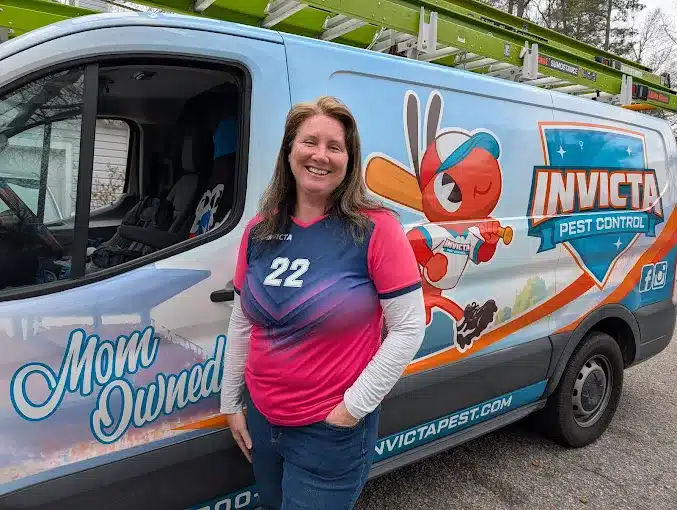
Quick context if you are new here: I started Invicta because, as a mom, I wanted pest control I could actually trust around my own kids. At the time, that was not really on the table in Raleigh. So I built our mosquito program from scratch around three rules. No fogging. No installed misting systems. No granules.
Instead, we hold a lawn application license and apply liquid mosquito treatments directly to the vegetation where mosquitoes rest during the day. For waterfront properties, that approach is kind of a cheat code.
We respect the buffer. We apply where mosquitoes actually rest, which is in the shaded landscaping, mulch beds, dense shrubs, and undersides of leaves. Not into the air. Not into the water. Your fish stay fish. Your frogs stay frogs.
Our wildlife biologist is on the team, not on a stock photo. I have a Wildlife Biologist from NC State and an Environmental Scientist on staff. When a property has a pond, a creek, a koi setup, or backyard chickens, that expertise actually matters.
I start with the breeding sites. Knocking down adult mosquitoes is short-term relief. Finding and disrupting the breeding sources is what actually moves the needle. On waterfront properties, that inspection is 80% of the value. Where is water sitting that should not be. What easy fixes will reduce pressure (regrading, gutter cleaning, removing a tarp). Where might targeted larvicide actually make sense.
No granules. No fogging. No product sitting on the ground waiting for a paw, a bare foot, or a heavy rain to wash it straight into the pond.
I am a Board Certified Entomologist with over 20 years in the field. Invicta is QualityPro and GreenPro certified, the two highest benchmarks in pest management for safety and environmental responsibility. I earned both because they matter, and I bring that thinking to every waterfront lot I walk.
What You Can Do This Weekend (For Free)
NC State Extension calls it “tip and toss,” and honestly, it is the cheapest mosquito control you will ever do. A 30-minute lap around the yard before we even show up takes serious pressure off the property.
The quick hits:
- Dump anything holding water that does not need to (buckets, watering cans, planter saucers, kid pools, pet bowls)
- Clean the gutters
- Flush birdbaths and fountains every 3 to 4 days
- Drain any tarp pooling
- Fill tree holes with sand or expanding foam
- Stock real ponds with bluegill or mosquitofish
- Put up a bat house. Add a purple martin box. Purple martins are North Carolina’s secret weapon and a single colony can eat thousands of mosquitoes a day
You will not solve the whole problem this way, especially if you back up to permanent water. But every breeding site you knock out is a few hundred mosquitoes you do not have to fight later.
Yes, We Probably Cover Your Neighborhood
My team treats waterfront and water-adjacent properties across Raleigh, Durham, Cary, Apex, Holly Springs, Chapel Hill, Wake Forest, Clayton, and the rest of the Triangle. Backing up to Falls Lake. Fronting an HOA retention pond. Along a creek that floods every spring. We have done it.
Ready to Reclaim Your View?
Call us at (984) 300-0117 or request a quote online. I will walk your property with you, find every breeding site (the obvious ones AND the sneaky ones), build a plan that respects the water and crushes the mosquitoes, and back it with a guarantee. Backed by my team of certified entomologists, an environmental scientist, and a wildlife biologist who actually understands how aquatic ecosystems work.
The view is the reason you bought the house. The mosquitoes do not get to be part of the deal.
Frequently Asked Questions
What attracts mosquitoes to lakefront and waterfront homes in Raleigh?
Mosquitoes need standing water to breed and shaded vegetation to rest in during the day. Lakes, ponds, creeks, and HOA retention ponds provide both — plus a steady supply of warm-blooded hosts. Properties within a few hundred feet of permanent water consistently have heavier mosquito pressure than inland yards.
Does mosquito spraying work near water?
Yes, but only when it is done correctly. The EPA requires a 25-foot ground-application buffer from lakes, ponds, rivers, and marshes because pyrethroid pesticides are highly toxic to fish and aquatic invertebrates. Companies that ignore that buffer either skip the buffer zone — leaving your worst mosquito strip untreated — or treat it anyway and damage the ecosystem.
Is mosquito spray safe for fish, pets, and chickens?
Standard pyrethroid sprays are highly toxic to fish and aquatic life and can affect pets if they contact wet product. We use a lawn-application liquid program, respect the EPA buffer, and target the shaded landscaping where mosquitoes actually rest — not the open lawn, the water, or the dock.
How do I get rid of mosquitoes near a retention pond?
Tackle three layers at once: eliminate the small, hidden standing-water breeding sites in your yard (“tip and toss”), treat the resting vegetation around the perimeter, and address the pond margin with appropriate larvicides where allowed. A property-specific plan beats a generic monthly spray every time.
Does Invicta Pest Control treat properties along Falls Lake and the Neuse?
Yes. We treat waterfront and water-adjacent properties across Raleigh, Durham, Cary, Apex, Holly Springs, Chapel Hill, Wake Forest, Clayton, and the rest of the Triangle. Falls Lake, Lake Wheeler, the Neuse, Crabtree Creek, and HOA retention ponds in newer subdivisions are all in our regular service area.
Related Reading
- Venomous Snakes in Raleigh, NC: What You Actually Need to Worry About
- Stay One Step Ahead of Ticks: Protect Yourself Outdoors
- Gutter Cleaning’s Impact on Pest Control
- Our Mosquito Control Service
If you are pairing mosquito service with pest and termite coverage, our Raleigh bundle includes Mosquito, Flea, and Tick service free for the rest of 2026 with a new Pest and Termite Agreement.